
Sports injuries can happen in an instant, whether you’re playing in a local league, training at the gym, running through your neighborhood, or cheering on your child’s weekend game. The reality on the ground is that twisting an ankle on an uneven patch of turf or tearing a muscle during a heavy lifting set can sideline you for months if handled incorrectly. The good news is that many of these acute physical setbacks do not require a grueling, expensive emergency room visit. Instead, seeking urgent care for sports injuries provides fast evaluation, prompt treatment, and expert guidance to help you recover safely without the hospital bureaucracy. At NovaHealth Urgent Care of Southfield, we proudly serve patients throughout Southfield, MI, with walk-in medical care for a wide range of sports-related injuries, helping athletes and active individuals get back to their routines as quickly as possible.
Key Takeaways
- Immediate Evaluation: Urgent care is ideal for many mild to moderate sports injuries, including sprains, strains, minor fractures, and cuts.
- Rapid Access: NovaHealth Urgent Care of Southfield offers walk-in treatment with shorter wait times than many emergency rooms.
- Complication Prevention: Early evaluation helps reduce pain, prevent complications, and support a smoother recovery.
- Reinjury Mitigation: Personalized recovery instructions help lower the risk of reinjury and speed healing.
- ER Protocols: Emergency rooms remain the best option for severe injuries such as head trauma, heavy bleeding, or compound fractures.
Why Should You Choose Urgent Care for Sports Injuries?
Urgent care for sports injuries offers a rapid, highly accessible alternative to emergency rooms for non-life-threatening athletic trauma. Choosing NovaHealth Urgent Care of Southfield means bypassing the volatile waiting environments of major hospital systems while receiving targeted orthopedic assessments from skilled practitioners.
The truth is, waiting six hours in a crowded hospital lobby for a simple ankle sprain introduces unnecessary financial strain and emotional exhaustion. At NovaHealth Urgent Care of Southfield, our experienced providers treat patients of all ages—from young athletes and high school competitors to weekend warriors and fitness enthusiasts. Whether your injury happened during practice, competition, or recreational exercise, we’re here to help you recover safely.
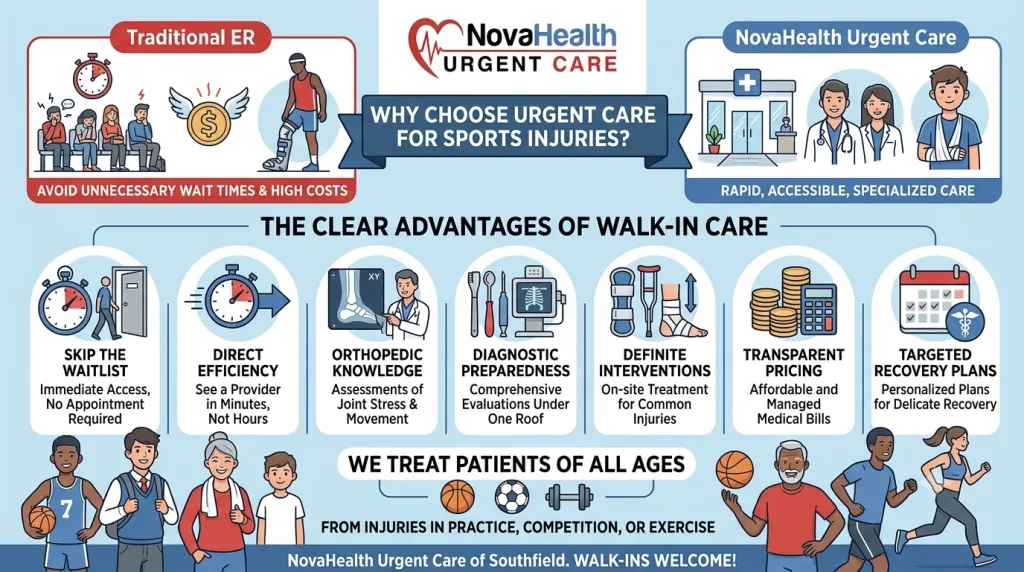
The Clear Advantages of Walk-In Care
- Skip the Waitlist: Walk-in availability with no appointment required means immediate access when the trauma occurs.
- Direct Efficiency: Shorter wait times put you in front of a provider within minutes, not hours.
- Orthopedic Knowledge: Experienced healthcare providers understand the mechanics of athletic movement and joint stress.
- Diagnostic Preparedness: Comprehensive injury evaluations are completed under one roof.
- Definite Interventions: On-site treatment for many common injuries ensures you leave stabilized.
- Transparent Pricing: Affordable care compared to many emergency room visits keeps your out-of-pocket medical bills manageable.
- Targeted Recovery Plans: Personalized recovery recommendations help you navigate the delicate weeks following an injury.
Need Fast, Reliable Care Now? NovaHealth Urgent Care Puts People First! Contact Us Today!
What Common Sports Injuries Can Be Treated Immediately?
A dedicated walk-in clinic efficiently manages acute soft-tissue damage, minor bone trauma, and localized joint inflammation caused by intense physical exertion. Our medical team is equipped to evaluate and treat mechanical structural damage without the need for hospital admission.
Athletic injuries range from mild discomfort to more serious conditions, but many can be successfully treated in an urgent care setting. Here’s the part most clinics won’t tell you: ignoring a seemingly minor tear can alter your biomechanics permanently. Our medical team commonly evaluates and treats:
- Ligament Sprains: Overstretched or torn connective tissues, such as lateral ankle sprains or knee ligament micro-tears.
- Muscle Strains: Overextended muscle fibers or acute tears resulting from explosive movements or poor warm-up habits.
- Minor Fractures: Stable, non-displaced bone cracks that require immobilization but not surgical realignment.
- Tendonitis: Chronic or acute inflammation of tendons, commonly affecting the Achilles, patellar, or rotator cuff structures.
- Knee Pain: General joint dysfunction, meniscus irritation, or patellofemoral tracking issues caused by repetitive impacts.
- Shoulder Injuries: Rotator cuff strains, minor subluxations, and acromioclavicular joint soreness from overhead sports.
- Wrist and Hand Injuries: Hyperextension injuries, jammed fingers, and scaphoid tenderness from falling on an outstretched hand.
- Foot and Ankle Injuries: Plantar fascia strains, heel contusions, and severe inversion trauma are common in field sports.
- Joint Swelling: Effusion within joint capsules caused by sudden trauma or repetitive stress.
- Contusions: Deep tissue bruising that requires monitoring to prevent conditions like myositis ossificans.
- Lacerations: Clean cuts and skin tears requiring irrigation, exploration, and immediate closure.
- Overuse Injuries: Stress reactions and shin splints stemming from sudden changes in training volume or poor footwear selection.
Prompt treatment often helps reduce swelling, relieve pain, and prevent a minor injury from becoming a bigger problem.
What Should You Expect During Your Injury Visit?
During your visit, you will undergo a structured, rapid assessment involving comprehensive triage, targeted physical testing, diagnostic imaging, and immediate orthopedic stabilization. The entire process is engineered to diagnose and treat your condition in under an hour.
If you’ve never visited an urgent care clinic for a sports injury, you may be wondering what the process looks like. At NovaHealth Urgent Care of Southfield, we’ve designed every step to be efficient, comfortable, and focused on getting you the care you need.
The Injury Care Sequence
| Traditional Emergency Room Process | NovaHealth Urgent Care Process |
| Hours of Waiting: Patients are triaged behind life-threatening medical emergencies. | Immediate Triage: Medical histories and injury mechanics are recorded quickly upon entry. |
| Broad Assessments: General medicine staff address systemic issues before localized orthopedic injuries. | Focused Physical Exams: Targeted testing assesses swelling, bruising, and structural joint stability. |
| Delayed Diagnostics: Shared hospital imaging machinery can delay simple imaging results for hours. | On-Site Imaging: Direct digital imaging provides immediate confirmation of bone and joint status. |
| Generalized Discharge: Patients often receive basic stabilization with generic follow-up instructions. | Active Orthopedic Care: Splints, braces, and specialized wound care are applied immediately with precise recovery plans. |
Diagnostic and Physical Evaluation Checkpoints
To pinpoint the exact nature of your injury, our clinical team focuses on concrete, objective physical metrics:
- Palpation Protocols: Pinpointing localized tenderness over bones and ligaments to screen for structural failure.
- Functional Range Testing: Measuring exact degrees of joint mobility to check for mechanical blockages.
- Resisted Strength Metrics: Testing muscle and tendon groups against resistance to isolate tears or severe strain.
- Joint Laxity Checks: Performing targeted stress tests to evaluate the integrity of stabilizing ligaments.
- Weight-Bearing Capacity: Assessing your immediate ability to stand or walk, which dictates early immobilization needs.
Sometimes a patient thinks they simply “rolled an ankle,” only to discover there’s a small fracture or ligament injury. That’s why a professional evaluation is so important.
Essential Industry Terms
- Displaced Fracture: A complete break where the bone pieces move out of alignment, requiring surgical intervention.
- Subluxation: A partial dislocation of a joint where the bone slips out of place but returns to its socket.
- Contusion: An injury that causes bleeding under the skin or deep in the muscle tissue without breaking the surface.
- Ligament: Tough bands of fibrous tissue that connect bone to bone, providing primary joint stability.
- Tendon: Flexible but inelastic cords of strong fibrous tissue attaching a muscle to a bone for movement.
Field-Tested Medical Insight
Clinic Director Insight: The single biggest mistake we see active individuals make is trying to “walk off” an injury during the first 24 hours. Applying weight to a compromised ligament structure stretches the tissue past its structural limits, lengthening your rehabilitation timeline by weeks. If a joint feels unstable or refuses to support your weight, immobilize it immediately and let professionals run structural laxity tests.
When Is Urgent Care the Proper Choice for Care?
Urgent care is the appropriate choice when an athletic injury causes acute pain and localized dysfunction but does not involve systemic shock or severe limb deformity. These situations require professional intervention but do not warrant emergency room resources.
Choosing urgent care for sports injuries allows patients to receive quality medical care quickly while avoiding unnecessary emergency room visits for non-life-threatening conditions. It is the definitive option for:
- Isolated Extremity Trauma: Acute ankle sprains or hand injuries sustained during competitive play.
- Moderate Muscle Failure: Severe hamstring or calf strains that limit your regular gait.
- Suspected Closed Fractures: Localized bone pain after a fall, without skin penetration or visible bone exposure.
- Stitch-Required Lacerations: Deep skin cuts from equipment or turf that require immediate closing.
- Persistent Post-Game Soreness: Joint discomfort that worsens 24 to 48 hours after an intense training session.
When Should You Go Straight to the Emergency Room?
You must head directly to the nearest emergency department if your athletic injury involves head trauma, compromise of the airway, uncontrolled bleeding, or gross skeletal deformity. These indicators signal life-altering or limb-threatening emergencies that require major hospital capabilities.
Go to the emergency room immediately if you experience:
- Loss of Consciousness: Any period of blacking out or altered mental states following an impact.
- Severe Head Trauma: Suspected concussions accompanied by vomiting, blurred vision, or deep confusion.
- Uncontrolled Hemorrhaging: Heavy bleeding that fails to stop after applying direct, continuous pressure.
- Open Compound Fractures: Structural bone breaks where the bone has pierced through the skin surface.
- Cervical or Spinal Distress: Severe neck or back pain accompanied by numbness or tingling in the limbs.
- Systemic Exercise Distress: Sudden breathing difficulties or crushing chest pain during intense physical output.
- Gross Limb Deformity: Visibly misplaced joints or bones that indicate complete dislocation or severe displacement.
These conditions require hospital-based emergency care and should never be delayed.

Need Fast, Reliable Care Now? NovaHealth Urgent Care Puts People First! Contact Us Today!
Why Do Southfield Athletes Trust NovaHealth Urgent Care?
Residents throughout Southfield choose NovaHealth Urgent Care of Southfield because they know they’ll receive compassionate, efficient, and reliable medical care when injuries happen. The reality of dealing with a sudden physical setback is stressful enough; our clinic eliminates the logistical friction of getting professional answers.
Whether you’ve twisted your knee during soccer, strained a muscle at the gym, or injured your wrist while cycling, our team is committed to helping you heal with confidence. Our walk-in infrastructure gives local competitors access to rapid diagnostics without the administrative delays found in traditional medical systems.
Getting Your Recovery Back on Track
Sports injuries are an unfortunate part of staying active, but getting the right care quickly can make a significant difference in your recovery. At NovaHealth Urgent Care of Southfield, we’re committed to providing fast, compassionate, and high-quality treatment for athletes and active families throughout Southfield, MI. Whether you’re dealing with a sprain, strain, minor fracture, or another sports-related injury, our experienced providers are here to help every step of the way.
If you are dealing with a recent athletic setback, stop by our walk-in clinic for immediate medical support. Our specialized medical team stands ready to deliver comprehensive evaluations and custom recovery strategies. Walk into NovaHealth Urgent Care of Southfield today to secure top-tier urgent care for sports injuries and safely reclaim your competitive edge.
Frequently Asked Questions
Q: What specific sports injuries can urgent care centers treat?
A: Urgent care clinics are fully equipped to treat acute soft-tissue sprains, muscle strains, non-displaced bone fractures, minor joint dislocations, tendonitis flare-ups, and lacerations requiring layered sutures. Any injury that doesn’t involve systemic trauma or heavy, uncontrolled bleeding falls within urgent care capabilities.
Q: Do I need to schedule an appointment for sports injury care?
A: No appointments are necessary to receive care. NovaHealth Urgent Care of Southfield operates entirely on a walk-in basis, allowing injured athletes to walk through our doors and see an medical professional immediately after an injury occurs on the field.
Q: Can an urgent care clinic perform diagnostic X-rays on site?
A: Yes, our facility features advanced, on-site digital X-ray technology. This allows our clinical providers to immediately visualize underlying bone structures, rule out displaced fractures, and form an accurate diagnosis without sending you to an external imaging center.
Q: When should I choose the hospital emergency room over urgent care?
A: You must bypass urgent care and head straight to an emergency room if the sports injury causes a loss of consciousness, severe head trauma, visible compound fractures where bone cuts through skin, uncontrolled bleeding, or severe limb deformities.
Q: How quickly should I seek medical care after getting hurt?
A: It is highly recommended to seek professional medical evaluation within the first few hours of sustaining an injury. Early clinical intervention successfully manages the acute inflammatory response, reduces overall recovery times, and prevents you from worsening a soft-tissue tear.


